Claude Lemieux spent years asking hockey to fix what ultimately failed him
|
Daniel Lucente
May 31, 2026 (10:58)
|
|
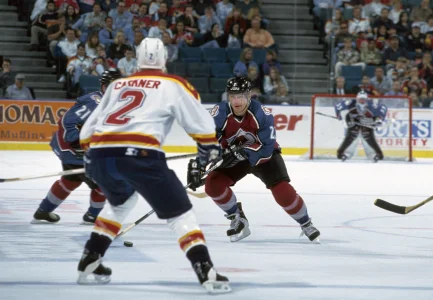
Photo credit: RVR Photos-Imagn Images
Claude Lemieux's family announced his brain will be donated to Boston University's CTE Center for research into repetitive brain injuries.
The four-time Stanley Cup champion died by suicide on May 28 at age 60. His daughter Claudia Lemieux Bishop released a statement Saturday confirming the donation to the UNITE Brain Bank, emphasizing that no diagnosis should be assumed.
The family called it a gift to science, athletes, and future generations seeking answers.
That framing matters because of who Lemieux became after he stopped playing. He worked as a player agent.
He mentored younger players through career transitions. He spoke publicly about wanting NHL players to find peace and wellness in retirement, emphasizing the importance of post-career health as something the hockey community needed to take seriously.
Those weren't throwaway comments. They were a roadmap for a support system the league still hasn't built.
The gap between advocacy and infrastructure
The NHL offers an employee assistance program and has expanded its mental health resources in recent years.
But there is no structured, long-term post-career wellness program that follows players through the decades after retirement.
Most players leave the game in their thirties. The next forty years arrive without a playbook, without a team, and often without the identity that defined them since childhood.
Lemieux understood this because he lived it. He stayed connected to the sport specifically to help others navigate that transition.
Darren McCarty, once Lemieux's fiercest rival, spoke this week about the real friendship they built behind the old rivalry.
McCarty has long advocated for mental health awareness among retired players and has been open about his own struggles after hockey.
Research without a response plan
The BU CTE Center now holds over 1,500 donated brains. The science is advancing. The league's response infrastructure is not keeping pace.
Lemieux's donation will contribute to understanding what repetitive brain injuries do over a lifetime.
But the harder question is whether the NHL will finally build the post-career framework he was asking for while he was still here to use it.
Also read on HockeyLatest :
Oilers interested in Flyers star but one major problem lingers
Oilers interested in Flyers star but one major problem lingers
| POLL | ||
MAI 31|126 ANSWERS Claude Lemieux spent years asking hockey to fix what ultimately failed him Do you think the NHL needs a formal post-career mental health program for retired players? | ||
| Yes | 120 | 95.2 % |
| No | 6 | 4.8 % |
| List of polls | ||